
Opportunities with practical value
We identify repetitive or demanding activities and compare humanoids with other approaches to automation. The result is a shortlist of scenarios worth examining in greater detail.
ALTAMENTE DIVISION
From a defined task to a robot that fits your operation.
We help identify useful applications and suitable platforms, use available software and skills, close integration gaps and prepare safe commissioning. For robot manufacturers, software vendors and AI platforms, we offer a route into the Czech market and further agreed EU markets.

FROM OPPORTUNITY TO A VALIDATED PILOT
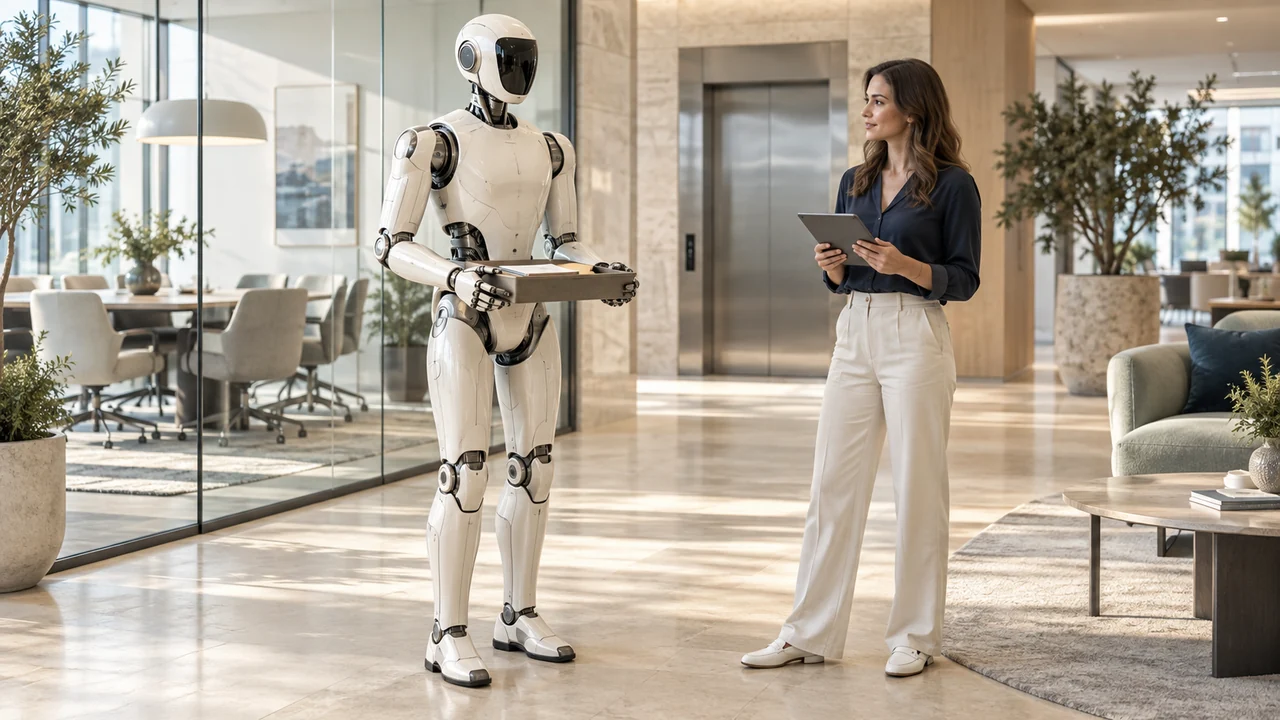 AI-generated
Understand the task first. Then select the robot and deployment approach.
Success depends on platform capabilities, task requirements, the environment, people and connections to business systems. Partner Readiness Lab is our framework for assessing these together. We distinguish evidenced functions, assumptions and questions that require a test.
The outcome is a next-step decision: use an existing application, adapt available skills, verify a missing capability, or choose another solution. The scope covers integration, responsibilities and acceptance criteria. Physical testing requires equipment, capacity and specialists confirmed separately.
 AI-generated
Movement, manipulation, perception, endurance and control options. We compare capabilities with the actual task, not just a specification sheet.
 AI-generated
What needs to be picked up, moved or operated? We consider accuracy, repetition, timing, exceptions and points requiring human help.
 AI-generated
Routes, doors, elevators, people, connectivity and charging. We establish what is already suitable and what must be prepared before a pilot.
We identify repetitive or demanding activities and compare humanoids with other approaches to automation. The result is a shortlist of scenarios worth examining in greater detail.
We break the process into steps and required capabilities. We describe the objects, timing, quality requirements and exceptions that may interrupt normal operation.
We map routes, obstacles, human movement and required system connections. We distinguish conditions the site already meets from changes needed for a meaningful pilot.
We compare requirements with documented platform capabilities. We separate available functions, announced development and features that still need to be verified through testing.
We identify missing integrations, limitations and risk scenarios. We outline supervision, handover to a person and safe termination of an activity when problems arise.
We consider integration, servicing, oversight, downtime and actual utilisation alongside the purchase price. Assumptions and scenarios make clear what the expected benefit depends on.
We define the scope, responsibilities, metrics and stopping conditions. A pilot should provide evidence to continue, change the brief or defer deployment.
We check whether an available application or transferable skill covers the task. If it does not, we assess configuration, programming, demonstration or learning options on a supported platform. For HRI, we define instructions, supervision, handover to a person and safe stopping.
Lab describes our collaboration and assessment process. Illustrations do not depict our own robot laboratory or a customer reference. Robot availability, physical tests and specialist capacity are confirmed for each project.
 AI-generated
We start with a specific workflow and first look for an existing application that covers it. We then select a supported platform, usable skills and the scope of adaptations.
A delivery may include configuration or programming, adding a skill through demonstrations or learning, customer integrations, validation and commissioning. Skill transfer depends on the robot, interfaces, licensing and vendor support.
Handover covers operators, operating procedures, acceptance evidence and agreed support. For an uncertain new capability, we separate a verification phase before committing to the complete deployment.
FOR TECHNOLOGY VENDORS
Enter the Czech and EU market with ALTAMENTE. Connect local customer needs with your product: localisation, use-case discovery, pilot preparation, system and customer-side integration, AI/data security, robotics readiness, documentation coordination and after-sales integration.
The first step defines territory, target use, technical capabilities, product support and responsibilities. For other EU countries, scope and local delivery arrangements are agreed for the particular project.
 AI-generated
We connect the robot, its software and customer operations as one system. Depending on the product, this covers interfaces, workflows, peripherals, access controls, business systems and update procedures.
We distinguish each capability as available and evidenced, requiring adaptation, or not yet verified. A learned skill needs defined conditions, tests, human oversight and a response to failure.
For AI and data, we involve the Digital division. Product software and safety functions remain within vendor documentation and support constraints.
CE marks conformity with applicable legal requirements. It is not EU approval of a product and does not, by itself, demonstrate that every installation is safe.
We begin with the legal framework and intended use. These determine requirements, the conformity assessment procedure, documentation, tests and applicable standards. Workplace conditions, interaction with people and operational acceptance are addressed separately.
Changes after import — a new tool, software, AI model, learned skill or intended use — may affect risks, documentation and responsibilities. The actual change and relevant legal framework determine the consequences.
Review the task, robot capabilities, environment and people. Receive a gap assessment, a route to implementation and a preliminary budget.
Assessment outputsUse an existing application, adapt skills or add a specific missing capability; integrate, validate and hand over.
Delivery scopeInterested in home use? Domestic conditions, supervision and expected benefits require a separate assessment. Robotics for the home
For business customers, excluding VAT. Price, schedule, platform and specialist availability are confirmed against agreed inputs and scope. Prices are in CZK.
Proposed: CZK 9,900
Assess one manipulation of a closed crate up to 2 kg from shelf to table on the same floor, with one feedback round. No site visit, physical test or workplace safety assessment.
Service scopeFrom CZK 19,000
Review one process, propose a platform and application, identify skill and integration needs, and prepare an implementation plan and preliminary budget.
Service scopeFrom CZK 59,000
One defined task on a supported robot in a prepared environment. Assessment determines required adaptations and actual costs.
Service scopeFrom CZK 24,900
Specify one pilot, success criteria, measurement, responsibilities and an itemised plan. This covers preparation; tests, robot, specialists and external costs are priced separately.
Service scopeFrom CZK 39,000
Agreed product copy and terminology, a demonstration scenario and enquiry/support handover. Full market expansion, software, legal review, service and distribution are agreed separately.
Service scopeFor implementation, commissioning services are separated from the robot, tools, sensors, licences, workplace modifications and ongoing operation. Required safety measures must be included in the overall deployment scope and budget. Larger adaptations and learning have separate price ranges.
ALTAMENTE
Describe what the robot should do, what it handles and how you will judge success. A general description without sensitive attachments is enough for first contact.
 AI-generated